
Recent
Down a bit of a rabbit hole this morning and stumbled upon this article from the NY Times from 1984. We at TNC have talked often about Sci-fi parallels for today’s AI-apocalyptic-hype. Deep down, we’re hopeful (and even thrilled) because, Star Trek:
Humanity, though tested and battered, has not just survived; it has triumphed. There is order. Machines and technology will not get the best of us. They are adjuncts, never in command, and we zip through the galaxies, going where we choose. Our universe is a splendid place. ‘‘Star Trek’’ gives us reassurance.

Longtime fan of Cal Newport. And I’m no hyper-rationalist, but reading this article from the NY Times, and especially the quote from Jensen Huang (below) as Cal’s proof positive that those who view A.I. cautiously are maybe “just being weird”, I only have one question: have none of you seen WarGames?!
“I appreciate that many of us grew up and enjoyed science fiction, but it’s not helpful. It’s not helpful to people. It’s not helpful to the industry. It’s not helpful to society. It’s not helpful to the governments.”
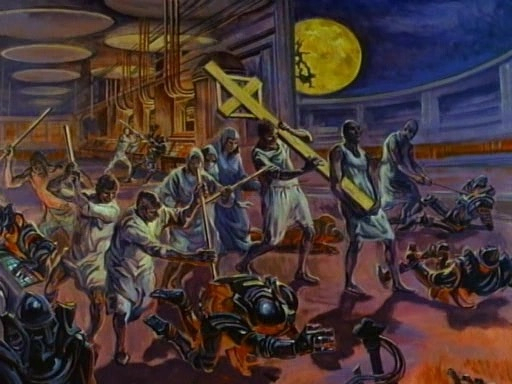
The era of AGI? Ask the Sci-fi prophets.
The “AGI era” is less about the technology and more about our attitudes around the technology. As I was reading the news (and hype) about Astra this morning, my copy of Pope Leo XIV’s Magnifica Humanitas sitting here next to me seemed like one of the most important documents written in my lifetime. At the same time, Brian Herbert’s (son of Frank Herbert) Dune: The Butlerian Jihad suddenly seemed prophetic. I think the question is less “are we ready” for AGI, and more about whether-or-not we’re ready for the global disruption to the idea of “work” that’s unfolding before our eyes. It always strikes me as odd that the conversation around A.I. centers almost solely around how close we are getting to be freed from work. How will we make a living in the post-AGI era? How will we feel a fulfilling sense of accomplishment, growth, and learning in our work without the annoyances and frustrations that go along with it? Why is it that we think, in our pursuit of freedom from work, that we’re not becoming slaves to the machines?

Finished reading: Two X Two by John Sondag 📚
A fun and hilarious novel by John Sondag, a Director of Religious Education here in the Twin Cities. The transition of priests/pastors/leaders from ministry can always be a difficult and challenging process, but when we find common ground in realizing the Church is bigger than all of us, we can rest assured that Truth will not only prevail, but will be the great motivation for our main purpose in ministry - the salvation of souls. In a world of fuzzy and fleeting moral therapeutic deism, our parishioners are better for our being grounded in Catholic Identity.
This excellent article from Dr. Nigel Cundy (the Quantum Thomist) - Does God cause the grass to grow?, reminds me a bit of how necessary childlike wonder is, and how we should all read more Chesterton. Here’s a quote from Orthodoxy:
It may not be automatic necessity that makes all daisies alike; it may be that God makes every daisy separately, but has never got tired of making them. It may be that He has the eternal appetite of infancy; for we have sinned and grown old, and our Father is younger than we. The repetition in Nature may not be a mere recurrence; it may be a theatrical encore.